
The Complete Guide to Hardwood Flooring Options in Asheville, NC
- jeremy186
- Feb 28
- 10 min read
Choosing the right flooring for your home is one of the most impactful decisions you'll make during any renovation. The floor sets the tone for every room, affects how comfortable your home feels underfoot, and plays a major role in how your property holds up over time. In Asheville, NC, that decision comes with a few extra considerations that homeowners in flat, dry climates never have to think about.

Western North Carolina's mountain climate brings real seasonal humidity swings, cold winters, and the moisture challenges that come with elevated terrain and older housing stock. The right floor for a Montford bungalow isn't necessarily the same as the right floor for a new build in Arden or a vacation cabin outside Weaverville. Getting that match right is exactly what One Stop Flooring Shop has been doing for Asheville families for more than six years, backed by over 20 years of industry experience.
This guide covers every major flooring type available, explains how Asheville's mountain environment affects each one, and gives you a clear framework for making the best decision for your home, your lifestyle, and your budget.
Hardwood Flooring — Timeless Beauty for Asheville Homes
Few flooring materials carry the warmth and character of real hardwood. It's the floor that adds value to a home, improves with age when properly maintained, and never really goes out of style. For Asheville homeowners, hardwood is often the aspirational choice — and with good reason.
The key decision in this climate is solid vs. engineered hardwood. Solid hardwood is milled from a single piece of wood and can be sanded and refinished many times over its lifetime, routinely lasting 50 to 100 years. The trade-off is that solid wood expands and contracts with humidity changes. In a mountain environment like Asheville, where relative humidity can swing significantly between summer and winter, this movement can cause gapping, cupping, or squeaking if the floor isn't properly acclimated and the home isn't humidity-controlled.
Engineered hardwood addresses this directly. Its cross-ply construction — real wood on the surface, layered plywood core beneath — is dimensionally more stable. It handles humidity fluctuations better than solid hardwood, making it a smarter choice for many Asheville homes, particularly on lower levels or in spaces where the humidity isn't as tightly controlled.
Popular hardwood species for Asheville homes:
Red oak and white oak remain the most requested species, offering excellent durability (Janka hardness rating of 1,290 for red oak, 1,360 for white) and a wide range of stain compatibility. Hickory is growing in popularity for its bold grain character and mountain-home aesthetic. Walnut brings a darker, richer look with slightly softer characteristics. Hand-scraped and wire-brushed finishes — which add texture and hide minor scratches over time — have become particularly popular in Asheville's design-forward renovation culture.
Brands One Stop carries: Somerset, Shaw, Mohawk, Mannington, Azalea Lane, LW Flooring, Mullican, and Palmetto Road. Somerset's Appalachian Collection, sourced from hardwood mills in the mountain region, is worth asking about specifically — it's a genuinely local connection that larger chain stores can't offer.
If you're comparing hardwood to other options before deciding, the hardwood vs. LVP comparison guide breaks down the trade-offs honestly for Asheville homeowners.
Luxury Vinyl Plank (LVP) — Waterproof Durability for Mountain Living
LVP has completely changed the flooring conversation over the past decade, and Asheville homeowners have noticed. It looks like hardwood, performs like a tank, and costs considerably less — but the reason it's become the top seller in most of our showroom categories comes down to one word: waterproof.
Modern LVP is built on a rigid core — either stone-plastic composite (SPC) or wood-plastic composite (WPC) — with a photographic layer that realistically mimics wood grain, stone, or tile, protected by a clear wear layer on top. That wear layer is the key spec to understand. Residential-grade LVP typically carries a 12-mil wear layer. Commercial-grade runs 20 mil and above. The thicker the wear layer, the longer the floor will resist scratching, scuffing, and daily foot traffic.
For Asheville homes, LVP offers specific advantages that hardwood can't match:
True waterproof performance means it's safe for kitchens, bathrooms, laundry rooms, mudrooms, and basements — every high-moisture area where hardwood carries risk.
Dimensional stability in humidity-variable environments means the floor won't gap, cup, or warp with Asheville's seasonal changes.
Comfort underfoot — particularly with an attached underlayment or a thicker WPC core — is noticeably better than tile for daily barefoot living.
Resilience to mountain living realities: muddy boots, wet dogs, snow-covered gear coming through the door.
Brands One Stop carries: Shaw, Mohawk, Stanton, LW Flooring, Karndean, Mannington, Southwind, Coretec, Happy Feet, Legendary Floors, and Engineered Floors. Karndean and Coretec are worth particular attention — both are widely regarded as among the highest-quality LVP products on the market, combining realistic aesthetics with commercial-grade durability.
Visit our LVP page to see the full product lineup, or explore the LVP flooring guide for Asheville homeowners for a deeper comparison.
Carpet — Comfort and Warmth for Western NC Winters
Carpet doesn't get enough credit. In the right rooms — bedrooms, living rooms, bonus rooms, home offices — carpet delivers warmth, acoustic comfort, and softness underfoot that no hard surface can match. On a cold Asheville winter morning, stepping out of bed onto carpet is a different experience than stepping onto hardwood or tile.
The fiber type is the most important variable in carpet performance:
Nylon is the most durable carpet fiber available. It's resistant to staining, abrasion, and crushing, making it the best choice for high-traffic areas and households with kids or pets. Shaw's Anso nylon and Mohawk's SmartStrand nylon are both excellent options.
SmartStrand (Triexta) offers exceptional stain resistance because the color runs through the fiber rather than sitting on the surface. Spills bead up and clean up easily, which makes it popular for family rooms and dining areas.
Polyester provides vibrant color options and good softness at a lower price point than nylon. It's a solid choice for bedrooms and lower-traffic areas.
Berber and loop pile constructions are durable and hide foot traffic well. Cut pile styles — plush, saxony, textured — offer more cushioning and a more formal appearance.
Brands One Stop carries: Dream Weaver, Shaw, Mohawk, and Southwind. Dream Weaver is a standout brand in the residential carpet category, known for high face weight (the density of the carpet pile, measured in ounces per square yard — a key durability indicator) and exceptional colorfastness.
For homes with pets, the pet-friendly flooring guide covers which carpet fiber types hold up best to claws, accidents, and general pet activity.
Tile Flooring — Versatile Performance for Kitchens and Bathrooms
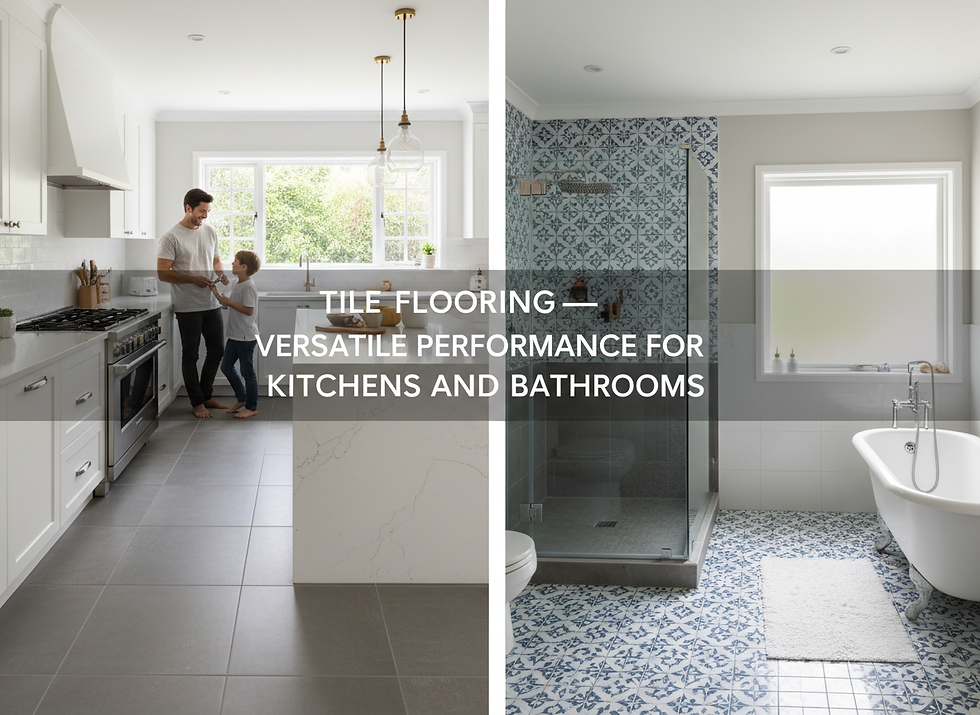
Tile is essentially permanent. Properly installed ceramic or porcelain tile over a sound substrate can last as long as the house itself. It's impervious to water, easy to clean, and available in an extraordinary range of sizes, colors, patterns, and textures. For Asheville kitchens, bathrooms, mudrooms, and entryways, tile is frequently the most practical choice.
The main distinction to understand is ceramic vs. porcelain:
Ceramic tile is made from clay fired at lower temperatures. It's slightly more porous and softer, making it easier to cut during installation. It works well in moderate-traffic dry areas.
Porcelain tile is fired at higher temperatures with denser clay. It's harder, less porous, and more resistant to moisture, staining, and freeze-thaw cycles. For bathrooms, outdoor-adjacent spaces, and high-traffic floors, porcelain is generally the stronger choice.
PEI ratings (Porcelain Enamel Institute) tell you how much foot traffic a tile can handle:
PEI 1–2: Wall tile or very light use
PEI 3: Standard residential floors
PEI 4: Heavy residential or light commercial
PEI 5: Commercial and industrial use
For most Asheville home floors, PEI 3 or 4 is appropriate.
Tile trends in Asheville: Large-format tile (24x24 and larger) continues to grow in popularity for its clean, contemporary look and fewer grout lines. Wood-look tile — porcelain that convincingly mimics hardwood plank — is popular for bathrooms and covered porches where real wood can't go. Geometric and Moroccan-pattern tile makes a statement in kitchens and entryways. Textured slate-look porcelain connects well with Asheville's mountain aesthetic.
Brands One Stop carries: Crossville, Dal Tile, Happy Floors, Florida Tile, Bella, Shaw, Merola, and Floors 2000. Crossville is a Tennessee-based manufacturer that aligns well with the regional connection Asheville customers value.
Explore our full tile product page for current availability, or check the projects gallery to see completed tile installations across Asheville homes.
Laminate Flooring — Budget-Friendly Style Without Compromise
Modern laminate has come a long way from the boxy, hollow-sounding floors of earlier generations. Today's laminate uses advanced photography and texture embossing to realistically mimic hardwood, stone, and tile at a fraction of the cost. For budget-conscious Asheville homeowners who want the look of wood without the investment, laminate deserves serious consideration.
The AC rating system (Abrasion Class) is how laminate durability is communicated:
AC1–AC2: Light residential use (bedrooms, guest rooms)
AC3: General residential use
AC4: Heavy residential or light commercial
AC5: Commercial and heavy traffic
Most residential laminate installations call for AC3 or AC4. Water-resistant laminate — which uses a sealed core and moisture-resistant surface — now extends the use case for laminate beyond the traditional limitation of "keep it away from water." That said, water-resistant is not waterproof. For truly wet areas, LVP or tile remains the better choice.
One practical advantage of laminate: it's among the fastest products to install. A floating laminate floor can be ready for furniture within hours of installation, making it popular for staged renovations and rental property turnarounds.
Brands One Stop carries: Southwind, Engineered Floors, LW Flooring, Mannington, and Mohawk.
How to Choose the Right Flooring for Your Asheville Home
With five flooring categories to choose from and a mountain climate that adds its own variables, it helps to have a clear decision framework. Here's how to think through the choice:
Start with the room's moisture exposure. Bathrooms and utility rooms need waterproof flooring — LVP or tile. Basements in Asheville homes need either waterproof LVP or tile, full stop. Hardwood and standard laminate in below-grade or crawl-space-adjacent rooms is a risk that regularly leads to warping, mold, and expensive replacements.
Consider foot traffic and lifestyle. Households with kids and dogs need surfaces that resist scratching and clean up easily. LVP, porcelain tile, and nylon carpet all perform well under heavy use. For lower-traffic spaces like guest bedrooms or formal dining rooms, the calculus shifts toward aesthetics.
Think about your subfloor condition. Older Asheville homes — particularly the craftsman bungalows in Montford, the vintage ranches in North Asheville, and anything built before 1970 — often have subfloor irregularities that affect which products can go down and at what cost. One Stop's free in-home consultation includes a subfloor assessment for exactly this reason. Schedule yours here.
Match the aesthetic to the home's character. Asheville has one of the most design-forward residential cultures in the Southeast. Wide-plank white oak hardwood fits a Biltmore Forest Tudor. Concrete-look LVP fits a modern West Asheville renovation. Wire-brushed hickory fits a mountain cabin. Geometric tile fits a remodeled Arts and Crafts kitchen. See real examples in our projects gallery.
Budget realistically, including installation. Material costs vary widely, but installation quality determines longevity. Professional installation protects your manufacturer warranty, ensures proper subfloor prep, and eliminates the common problems that DIY installations create. Get a free in-home estimate to understand your total project cost before making a material decision.
Flooring type comparison at a glance:
Flooring Type | Waterproof | Durability | Best Rooms | Lifespan | Cost Range |
Solid Hardwood | No | High | Living, Dining, Bedrooms | 50–100 yrs | $$$$ |
Engineered Hardwood | Resistant | High | All above-grade rooms | 25–30 yrs | $$$ |
LVP | Yes | Very High | Any room | 15–25 yrs | $$ |
Carpet | No | Moderate | Bedrooms, Media Rooms | 5–15 yrs | $ |
Tile | Yes | Very High | Kitchen, Bath, Entry | 30+ yrs | $$–$$$ |
Laminate | Resistant | Moderate | Living Areas, Bedrooms | 15–25 yrs | $ |
Frequently Asked Questions About Flooring in Asheville, NC
What is the most popular flooring type in Asheville?
LVP has become the highest-volume category for most Asheville flooring stores, including One Stop. Its combination of waterproof performance, realistic appearance, and durability at a reasonable price point makes it the practical choice for a wide range of rooms and home types. Hardwood remains the aspirational choice for main living areas, and tile continues to dominate kitchens and bathrooms.
How does Asheville's mountain climate affect flooring?
Asheville's elevation, seasonal humidity swings, and cooler winters create specific challenges. Solid hardwood needs proper acclimation (typically 3–7 days) before installation and benefits from year-round humidity control (ideally 35–55% RH). Basements and crawl-space-adjacent floors are higher moisture-risk zones than they would be in drier climates. LVP and tile handle the mountain environment without these concerns.
How much does new flooring cost in Asheville, NC?
Material and installation costs combined typically range from $3–$5 per square foot for basic carpet, $4–$7 for LVP, $5–$10 for laminate, $8–$15 for engineered hardwood, $10–$20 for solid hardwood, and $5–$15 for tile (depending on tile size and installation complexity). Subfloor preparation, furniture moving, and old floor removal add to the project total. The best way to understand your specific cost is through a free in-home estimate.
How long does flooring installation take?
Most residential rooms can be completed in one to two days. Whole-home projects are typically phased room by room over several days. Tile installations take longer due to mortar cure time. Your installer can give you a realistic timeline after seeing the space.
Do you offer free in-home estimates?
Yes. One Stop Flooring Shop offers free in-home appointments across Asheville and Western North Carolina. Your estimator will measure the space, assess the subfloor, discuss product options, and provide a detailed written quote — no pressure, no commitment required. Schedule here.
What flooring brands do you carry?
One Stop carries a comprehensive selection across all flooring categories. Wood brands include Somerset, Shaw, Mohawk, Mannington, Azalea Lane, LW Flooring, Mullican, and Palmetto Road. LVP brands include Karndean, Coretec, Shaw, Mohawk, Stanton, and Mannington, among others. Carpet brands include Dream Weaver, Shaw, Mohawk, and Southwind. Tile brands include Crossville, Dal Tile, Happy Floors, Florida Tile, Bella, Shaw, Merola, and Floors 2000. See the full products page for current availability.
Is LVP better than hardwood for mountain homes?
It depends on the room and the home. LVP outperforms hardwood in moisture-exposed areas, basements, and spaces without HVAC humidity control. Hardwood outperforms LVP in feel, refinishability, and long-term home value contribution in primary living areas. Many Asheville homeowners choose hardwood for main living spaces and LVP for kitchens, bathrooms, and lower levels. Read the full hardwood vs. LVP comparison for a detailed breakdown.
Ready to Find Your Perfect Floor?
Every home in Asheville is different, and so is every flooring project. The best floor for your space depends on factors that are hard to assess without seeing the room in person — which is exactly why One Stop Flooring Shop offers free in-home consultations across Asheville and all of Western North Carolina.
Stop by our showroom at 367 N. Louisiana Avenue in Asheville to walk through product samples, see real-room displays, and talk through options with an experienced team member. Browse our projects gallery to see completed installations across the region for inspiration.
When you're ready, request a free quote and we'll come to you.
Call us: 828-505-1267 | Text us: 828-775-5697


Comments