
Affordable Flooring Options for Every Room in Your Home
- jeremy186
- Feb 28
- 16 min read
Getting new floors shouldn't mean choosing between quality and your budget. The flooring market has come a long way in the past decade, and today there are genuinely good-looking, long-lasting options at every price point. Whether you're renovating a single bedroom, updating a rental property, or redoing your whole house, you can find affordable flooring that holds up and still impresses.

At One Stop Flooring Shop in Asheville, NC, we work with homeowners across Western North Carolina every day who want great floors without overspending. This guide walks through the best budget-friendly flooring options room by room, what to look for in each space, and how to get the most value out of every dollar you spend.
Why Room Matters When Choosing Affordable Flooring
The cheapest floor isn't always the most affordable floor. A $2/sq ft material that fails in a moisture-prone space within three years costs more in the long run than a $5/sq ft material that lasts 15 years with no issues. Real affordability means matching the right material to the right room — so you're not paying for more than you need in low-demand spaces, and you're not cutting corners in rooms that will punish you for it.
Every room in your home has different demands. Kitchens and bathrooms get wet. Basements have moisture from below. Living rooms need to look good and handle foot traffic. Bedrooms prioritize comfort and quiet. Understanding those demands first is what makes budget flooring decisions smart rather than just cheap.
Before you commit to any material, it's worth reading our post on 5 flooring mistakes Asheville homeowners make — many of those mistakes come down to choosing the wrong material for the space, regardless of price.
Affordable Bathroom and Kitchen Flooring: Moisture Resistance Is Everything
Why Moisture Resistance Comes First
Bathrooms and kitchens are where budget flooring choices most often backfire. It's tempting to put the cheapest option down in these spaces and move on, but moisture has a way of finding the weak points in a floor — swollen edges, lifted seams, discolored grout — and turning a bargain into an expensive problem.
The good news is that genuinely waterproof materials have become much more affordable. You don't need to spend premium prices to get a floor that can handle kitchen spills and bathroom humidity.
Best Affordable Options for Wet Rooms
Luxury Vinyl Plank (LVP) is the clear value leader for moisture-prone rooms. Entry-level LVP starts around $2–$4 per square foot for the material, with installed costs ranging from $4–$8/sq ft depending on the product and your kitchen or bathroom's complexity. It's 100% waterproof throughout the plank body — not just on the surface — which means a slow drip from the dishwasher or humidity from a daily shower isn't going to damage it.
At One Stop Flooring Shop, we carry LVP from brands including Happy Feet, Shaw, Southwind, and Mohawk, which offer solid waterproof performance at accessible price points. These aren't stripped-down products — they have real wear layers, realistic wood and stone visuals, and warranties that back up the performance claims.
Ceramic tile is another strong budget option for kitchens and bathrooms, particularly at the entry level. Ceramic is less expensive than porcelain and still provides excellent moisture resistance when glazed and properly grouted. Our tile product selection includes options from Merola, Floors 2000, and Florida Tile that deliver durability at approachable price points.
For a comparison of how these materials stack up specifically in kitchen environments, our complete kitchen flooring guide breaks down cost, performance, and aesthetics across all the main options.
Mold Prevention Tips for Budget Bathroom and Kitchen Floors
Budget materials can perform well in wet rooms, but installation quality and a few habits make a significant difference in mold prevention:
Ensure your subfloor is completely dry before installation. A moisture barrier or vapor retarder beneath LVP in kitchens and bathrooms adds an extra layer of protection. Seal grout in tile floors annually — unsealed grout in bathroom floors is one of the most common causes of mold growth in budget tile installations. Good ventilation (an exhaust fan that actually vents outside) reduces ambient humidity and extends the life of any floor in a bathroom.
Budget Living Room Flooring: Stylish Options That Impress Guests
The Living Room Challenge
Living rooms ask something of flooring that wet rooms don't: they have to look really good. It's the space guests see first, spend the most time in, and where the aesthetic of your whole home comes together. Budget flooring in a living room that looks obviously cheap defeats the purpose of renovating in the first place.
The good news is that the visual gap between affordable and expensive flooring has closed more dramatically in living rooms than anywhere else. Today's laminate and LVP collections have photographic print technology that produces genuinely convincing wood and stone looks, even at budget price points.
Best Affordable Options for Living Rooms
Waterproof laminate is one of the most cost-effective ways to get a beautiful wood-look living room floor. Modern laminate from brands like Southwind, LW Flooring, and Mohawk in our inventory offers realistic grain patterns, solid click-lock installation, and surface durability that handles living room traffic well. Installed costs typically run $5–$10/sq ft — meaningfully less than hardwood while delivering a look that most guests won't question.
LVP in wider plank formats is another strong choice. Wider planks (6–8 inches) read as higher-end visually, and the cost difference between narrow and wide plank LVP is minimal. Choosing a wider, lighter plank in a living room makes a space feel larger and more contemporary without changing the price category.
Comfort underfoot is a factor in living rooms that gets overlooked in spec comparisons. Both laminate and LVP benefit significantly from quality underlayment — a good foam or cork underlayment adds cushioning, reduces the hollow sound that budget floors sometimes have, and improves thermal comfort. Budget for underlayment as part of your living room flooring cost from the start.
Pet-Friendly Considerations for Living Room Floors
If you have pets, the living room floor takes more abuse than almost any other space — dog nails, pet beds dragging, the occasional accident. The most important spec to check in budget LVP for pet households is the wear layer thickness. Look for 12 mil minimum; some budget products cut corners here, and it shows within a couple of years of pet traffic.
Our blog post on how to choose pet-friendly flooring that stands up to paws and claws is worth reading before making any living room flooring decision in a pet household. It covers scratch resistance, waterproofing, and the species and products that perform best when animals are part of the equation.
Affordable Bedroom Flooring: Warm, Quiet Options for Better Sleep
What Bedrooms Actually Need From a Floor

Bedrooms are the most forgiving rooms in the house from a durability standpoint — no moisture, lighter foot traffic, no heavy furniture being moved constantly. That makes them the best place to prioritize comfort and warmth over raw toughness, and the right budget flooring for a bedroom can feel genuinely luxurious without costing much.
The two most important qualities in a bedroom floor are comfort underfoot and sound dampening. Cold, hard floors in a bedroom are jarring first thing in the morning. Floors that transmit noise — footsteps, creaking, the sound of a chair shifting — disrupt sleep and make the room feel thin and cheap. Budget flooring that addresses both of these things is the goal.
Best Affordable Options for Bedrooms
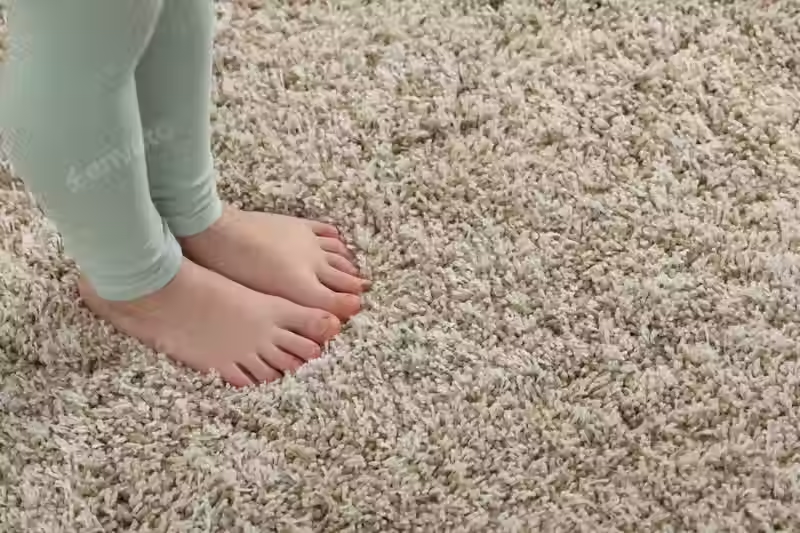
Carpet remains the warmest, softest, and quietest option available for a bedroom floor, and at the entry level, it's also one of the most affordable. Budget carpet from brands like Dream Weaver and Southwind in our inventory starts at very accessible price points and installs quickly. Carpet naturally insulates against cold and absorbs sound in a way that hard surface flooring simply can't match.
The knock against carpet — staining, pet odor, allergens — matters much less in a bedroom than it would in a kitchen or living area, making it the right trade-off for many homeowners. If you have a pet that sleeps in the bedroom, read our pet-friendly flooring guide before committing — some carpet constructions hold up to pets far better than others.
Budget LVP with a thick underlayment is the right bedroom choice for homeowners who want a hard surface. The underlayment does the heavy lifting for both comfort and sound in a bedroom — a quality foam or cork underlayment under LVP delivers warmth and quiet that rivals carpet for many people. This combination also works well in bedrooms where consistency with the rest of the home matters aesthetically.
Laminate in bedrooms works well too, particularly for kids' rooms where a hard surface is easier to clean but warmth and cushioning are still priorities. Choose a thicker product (10mm+) with attached underlayment for the best feel.
Temperature Considerations in Asheville Bedrooms
Asheville's mountain winters are cold, and bedrooms — especially those over unconditioned crawl spaces — can feel the chill through the floor. Carpet provides natural insulation. If you're choosing a hard surface floor for a bedroom over a cold subfloor, a quality foam underlayment makes a noticeable difference. This is a small cost addition that significantly improves the comfort of any budget hard surface floor in a WNC bedroom.
Cheap Basement Flooring: Moisture-Resistant Options for Below Grade
The Basement Floor Problem
Basements are the trickiest room in the house for flooring. The challenge isn't just surface moisture — it's moisture coming up from below, through concrete, as humidity and vapor migration. Any flooring installed below grade needs to be able to handle ground moisture, and materials that fail to do this correctly turn into mold traps.
Budget flooring mistakes in basements are also among the most expensive to fix — tearing out a failed laminate installation over a wet slab means labor, disposal, and starting over. Getting the material selection right the first time is the real economy here.
Best Affordable Options for Basements
LVP with a waterproof rigid core is the strongest basement flooring choice, and it's genuinely affordable. Because the plank is 100% waterproof throughout its body, moisture vapor coming up from the concrete below doesn't damage the material the way it would hardwood, laminate, or carpet. LVP floats above the subfloor on a click-lock system, which also means it can be installed relatively quickly without adhesive.
Our LVP selection includes SPC (stone plastic composite) core products that are particularly well-suited to basements — the denser, heavier SPC core resists moisture vapor more effectively than WPC core products, and it's more dimensionally stable in the cooler, more humid environment below grade.
Ceramic or porcelain tile is the other strong basement option, particularly for utility areas, laundry rooms, and workshops. Tile is impervious to moisture from below when properly installed, and its hard surface handles the heavy use that utility basements often see. The tradeoff is that tile is harder underfoot than LVP and colder — for finished living basements, LVP is typically more livable.
Waterproof laminate can work in basements with minimal moisture activity, but it's not the right call for basements with any history of seepage or standing water. If your basement has ever had water intrusion, LVP or tile is the conservative and ultimately more economical choice.
Concrete Covering and DIY Considerations
Many basement flooring projects are DIY-friendly, which can substantially reduce the total cost. LVP's click-lock floating installation is one of the more accessible DIY floor installations available — no glue, no nails, straightforward cuts, and a system that goes together logically. Before you start, though, the subfloor needs to be addressed: concrete should be flat (within 3/16 inch over 10 feet), dry, and free of major cracks or high spots.
If you're approaching a basement flooring project yourself, our guide on preparing your home for new flooring installation covers subfloor prep requirements in detail and will help you avoid the most common installation mistakes.
Affordable Flooring for Rental Properties: Durable, Budget-Friendly, and Tenant-Ready
The Rental Property Calculation
Rental property flooring is a different problem than owner-occupied flooring. The math isn't just about cost per square foot — it's about cost per year of usable life, ease of replacement, and how the floor reads to prospective tenants. A floor that looks outdated, is easy to damage, or is expensive to repair or replace works against your return on investment.
The goal for rental property flooring is a material that's hard to damage, easy to clean between tenants, looks good in listing photos, and can be replaced affordably if it gets trashed.
Best Affordable Options for Rental Properties
Mid-grade LVP hits this target better than any other flooring material for most rental applications. It's waterproof, scratch-resistant, looks good in person and in photos, and is relatively quick to install and replace. An LVP floor in a rental that gets replaced every 8–12 years (or when a particularly hard tenant warrants it) delivers solid ROI compared to hardwood that might get damaged and requires costly refinishing.
Choose a neutral mid-tone — a warm gray or light oak tone that photographs well, doesn't show dirt between cleanings, and appeals to a broad range of tenant preferences. Avoid very light floors (shows every scuff and footprint) and very dark floors (shows dust and scratches clearly).
Budget ceramic tile is a strong choice for kitchens and bathrooms in rental properties. It's essentially indestructible under normal residential use, easy to clean, and any cracked tiles can be replaced individually without pulling the whole floor. Use a dark or medium grout that doesn't show discoloration over tenancy cycles.
Carpet in bedrooms only is still worth considering in rental properties where the bedroom-to-common-area ratio makes it cost-effective. Budget carpet in bedrooms adds warmth and quiet that tenants appreciate, and replacing bedroom carpet between tenants is relatively affordable. Keep carpet out of kitchens, bathrooms, and high-traffic hallways.
Tenant Appeal Without Overspending
The biggest ROI driver in rental flooring is consistency and cleanliness — not premium materials. A neutral LVP floor that looks fresh and clean beats a premium hardwood floor that's showing two years of wear. Budget flooring that photographs well and installs consistently across the property projects professionalism that attracts and retains quality tenants.
You can see examples of finished installations across different property types in our project gallery, which includes rental-relevant before-and-after work we've done across Western North Carolina.
Pet-Friendly Affordable Flooring: Scratch-Resistant Options Under $5/sq ft
What Pets Actually Do to Budget Floors
Dogs scratch. Cats claw. Accidents happen. Budget flooring in a pet household faces demands that would challenge even some premium materials, and choosing the wrong product in this price range means you'll be replacing it in two or three years rather than ten.
The three things that matter most for pet-friendly affordable flooring are scratch resistance (wear layer thickness and surface hardness), moisture resistance (for accidents that don't get cleaned up immediately), and odor resistance or ease of cleaning (so the floor doesn't hold pet smell over time).
Best Options Under $5/sq ft for Pet Households
Entry-level LVP is the sweet spot for pet households on a budget. Products in the $2–$4/sq ft material cost range from brands like Happy Feet and Southwind offer 6–12 mil wear layers and waterproof cores that handle everyday pet activity well. These aren't the thickest or most premium products, but they're genuine improvements over laminate and hardwood for pet-specific concerns.
For households with multiple large dogs or particularly hard-charging pets, spend a few dollars more per square foot to get a 20 mil wear layer. The jump from 8 mil to 20 mil wear layer is the single most impactful spec change for scratch resistance in LVP, and many 20 mil products land in the $4–$6/sq ft material cost range. For everything that scratch resistance protects against in a pet household, it's worth it.
Ceramic tile under $5/sq ft is achievable and delivers excellent scratch and moisture resistance — dog nails don't affect tile at all, and pet accidents clean up completely without any absorption or odor retention in the tile itself. The limitation is comfort — tile is hard and cold, which matters if your pets lie on the floor regularly.
Cleaning Ease and Odor Resistance
For cleaning, LVP's edge over laminate is significant. Laminate's photographic surface can degrade with repeated wet mopping and strong cleaning products. LVP handles regular cleaning with pet-specific cleaners without surface damage.
Tile is the easiest floor to fully sanitize — no material holds onto pet odor less than glazed ceramic or porcelain. If odor control is a high priority in your household, tile in the rooms where pets spend the most time is worth considering.
For a full breakdown of how different materials hold up in pet households, see our dedicated guide to pet-friendly flooring that stands up to paws and claws.
Affordable Flooring for Open Floor Plans: Creating Cohesive Looks Without Spending More
The Open Floor Plan Challenge

Open floor plans are beautiful when they work and visually choppy when they don't. In a space where the kitchen, dining area, and living room all connect without walls, flooring decisions affect the entire sweep of the main living area. Transition strips, mismatched materials, and conflicting undertones all break the visual flow and make a well-intentioned budget renovation look unplanned.
The good news is that continuity is free — it's a planning decision, not a material cost. Choosing one floor that runs throughout the entire open area is almost always better looking and often less expensive than mixing materials and adding transition strips between them.
Running One Material Throughout
The most effective strategy for open floor plan affordable flooring is to choose a single LVP or laminate product and run it continuously from kitchen through dining to living area. This eliminates transition strips (a small cost saving, but a significant visual improvement), makes the space feel larger, and is simpler to install.
For open floor plans in Asheville homes, wide-plank LVP in a warm neutral tone — light oak, greige, or a soft gray-brown — works across the varied light conditions that open spaces tend to have. It reads as intentional and current without being trendy in a way that dates quickly.
Our LVP product selection includes collections specifically designed for whole-home use, with plank sizes and colorways that work across different rooms and light exposures.
Mixing Materials Strategically
Sometimes mixing makes sense — a tile kitchen that connects to an LVP living area, for example, or hardwood in the main living space transitioning to carpet in a bedroom hallway. When mixing is the right call, the key is to manage the transition deliberately:
Use a matching or complementary transition strip rather than a generic silver one. Align the floor change with a natural architectural break — a door threshold, a structural beam, a step up or down — rather than placing it arbitrarily in the middle of a shared space. Choose materials with similar undertones (both warm or both cool) so the two floors don't fight each other.
Avoiding common open-plan mistakes starts before installation. Our post on 5 flooring mistakes Asheville homeowners make covers the transition and material-mixing errors that we see regularly — many of them completely avoidable with a little upfront planning.
Visual Flow and Scale Considerations
Plank direction affects how a space feels. Running planks lengthwise along the longest dimension of an open floor plan makes the space feel more expansive. Running them perpendicular to the main entry creates a different — and sometimes more interesting — visual rhythm, but it's a choice to make intentionally, not accidentally.
Consistent plank direction across an open plan is also important when running one material through multiple areas. Changing direction at an imaginary kitchen-to-living-room line reads as a mistake rather than a design choice.
How to Get the Most Out of a Budget Flooring Project
Buy a Little More Than You Think You Need
A standard recommendation is to purchase 10% more material than your measured square footage to account for waste, cuts, and any installation mistakes. For budget flooring projects, we'd suggest going to 12–15% in rooms with angles, alcoves, or diagonal layouts. Running out of a discontinued or sold-out lot mid-project is one of the more frustrating and avoidable setbacks in a renovation.
Invest in Subfloor Prep
The single best way to get more value out of affordable flooring is to put it down on a properly prepared subfloor. High spots cause planks to flex and joints to crack. Low spots create hollow spots underfoot and make the floor feel cheap. A flat, clean, dry subfloor makes a $3/sq ft LVP feel solid and well-installed; a bad subfloor makes a $7/sq ft product feel like a disappointment.
Before any flooring installation, our guide on preparing your home for new flooring installation walks through exactly what needs to happen before the first plank goes down.
Don't Skip Underlayment
Underlayment is a small cost addition — typically $0.25–$0.75/sq ft — that improves the performance of budget flooring significantly. It adds cushioning, reduces noise, improves thermal insulation, and helps the floor feel more solid underfoot. For budget LVP and laminate in bedrooms and living areas especially, quality underlayment is one of the highest-value additions you can make.
See Options Before You Commit
Photos on a website or phone screen don't tell you what a floor feels like or how it looks in your specific lighting. Before committing to any material, it's worth coming to see it in person. Our showroom at 367 N. Louisiana Avenue in Asheville has a broad selection of flooring across all price points and categories on display, and our team can pull samples for you to take home and compare against your existing finishes.
We also offer free in-home consultations where we bring samples to you — useful if you want to see options in your actual light and space before deciding. Our 20+ years of experience in Western North Carolina means we know which budget products actually hold up in Asheville homes and which ones look good on the shelf but disappoint in real use.
Working With One Stop Flooring Shop on a Budget Project
Being a family-owned business means we work with homeowners at every budget level. We don't have a minimum project size, and we don't steer budget-conscious customers toward products they don't need. If you want the most floor for your money, we'll tell you where to spend and where to save.
Our full product line covers wood flooring, carpet, tile, LVP, and laminate across a wide range of price points and brands. We carry options from Dream Weaver, Southwind, Mohawk, Shaw, Happy Feet, and others — brands with consistent quality at accessible prices.
The best first step is a free quote. We offer free in-home appointments across Asheville and Western North Carolina — we come to you, measure your space, bring samples, and give you honest pricing without pressure. Request your free quote here, call us at 828-505-1267, or text us at 828-775-5697.
You can also book your appointment online at any time. We'd love to help you find something you'll be happy with — at a price that makes sense.
Frequently Asked Questions About Affordable Flooring
What is the most affordable flooring option overall?
Waterproof laminate and entry-level LVP are the most affordable hard surface options, with material costs starting around $1.50–$2.50/sq ft. Budget carpet is similarly priced and is the most affordable option for bedrooms specifically. Installed costs add $2–$4/sq ft depending on material and room complexity.
Is cheap LVP worth buying?
It depends on the spec, not just the price. Very thin LVP with a 4–6 mil wear layer will disappoint in high-traffic areas or pet households. Budget LVP with a 12 mil wear layer and a waterproof rigid core is genuinely worth buying for most residential applications. Check the wear layer thickness and the core type before buying on price alone.
Can I install budget flooring myself to save money?
LVP and laminate click-lock floors are among the more DIY-accessible installations available. The main requirements are proper subfloor prep, accurate measurement and cutting, and leaving appropriate expansion gaps. Tile and hardwood installation require more skill and equipment and are less forgiving of beginner mistakes.
What flooring is best for a home with both pets and moisture concerns?
LVP with a waterproof rigid core (SPC or WPC) addresses both. It handles moisture from the surface, handles the humidity of kitchens and bathrooms, and resists pet scratches when the wear layer is adequate (12 mil minimum). It's the one material that consistently answers both concerns at the same time.
How do I know which flooring makes sense for my budget and space?
The fastest way to get a clear answer is a free in-home consultation with our team. We'll look at the room, assess the subfloor, understand how you use the space, and match you with options that fit your needs and your budget — without guessing from photos.


Comments